Humanoid teleoperation: SenseGlove + HTC Vive
Driving a humanoid's arms in Isaac Lab 2.2 with Nova2 gloves and Vive trackers. No headset, no camera hand-tracking.
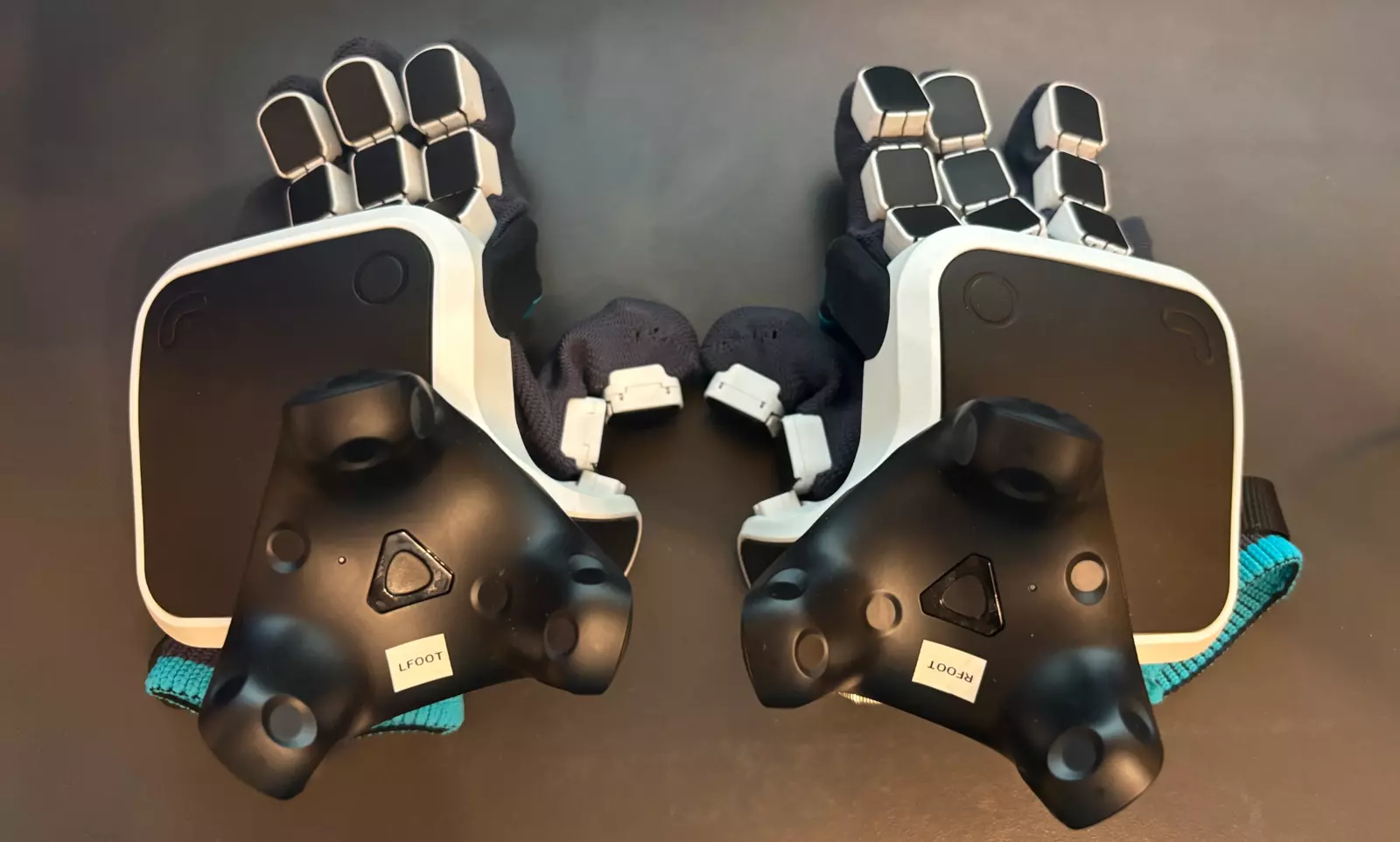
I’ve been experimenting with teleoperating a humanoid’s arms using Nova2 SenseGloves and HTC Vive trackers inside Isaac Lab 2.2. For now only the upper body: arms move, legs stay fixed.
There are teleop setups with Apple Vision Pro and Meta Quest, but I wanted to avoid a few things:
- Wearing a headset for long periods.
- Vision-based hand tracking: limited by camera streams, extra latency from the hand-tracking network, and it fails when fingers are occluded.
So I went sensor-based: gloves for finger and hand pose, trackers for hand position. Both stream at 100 Hz+ with minimal processing.
Three containers, one humanoid
To avoid dependency conflicts, everything is split into three Docker containers on a virtual bridge network:
- 1SenseGlove
Reads the Nova2 gloves, publishes hand joints over ROS 2.
- 2HTC Vive
Reads the trackers, publishes hand positions over ROS 2. Based on vive_ros2.
- 3Isaac Lab
Runs the humanoid in Isaac Lab 2.2, subscribes to both and drives the arms.
Vive integration, and a quick Viper test
vive_ros2 is built for Vive controllers. I first used it as-is for a quick test with my Viper 300s arm.
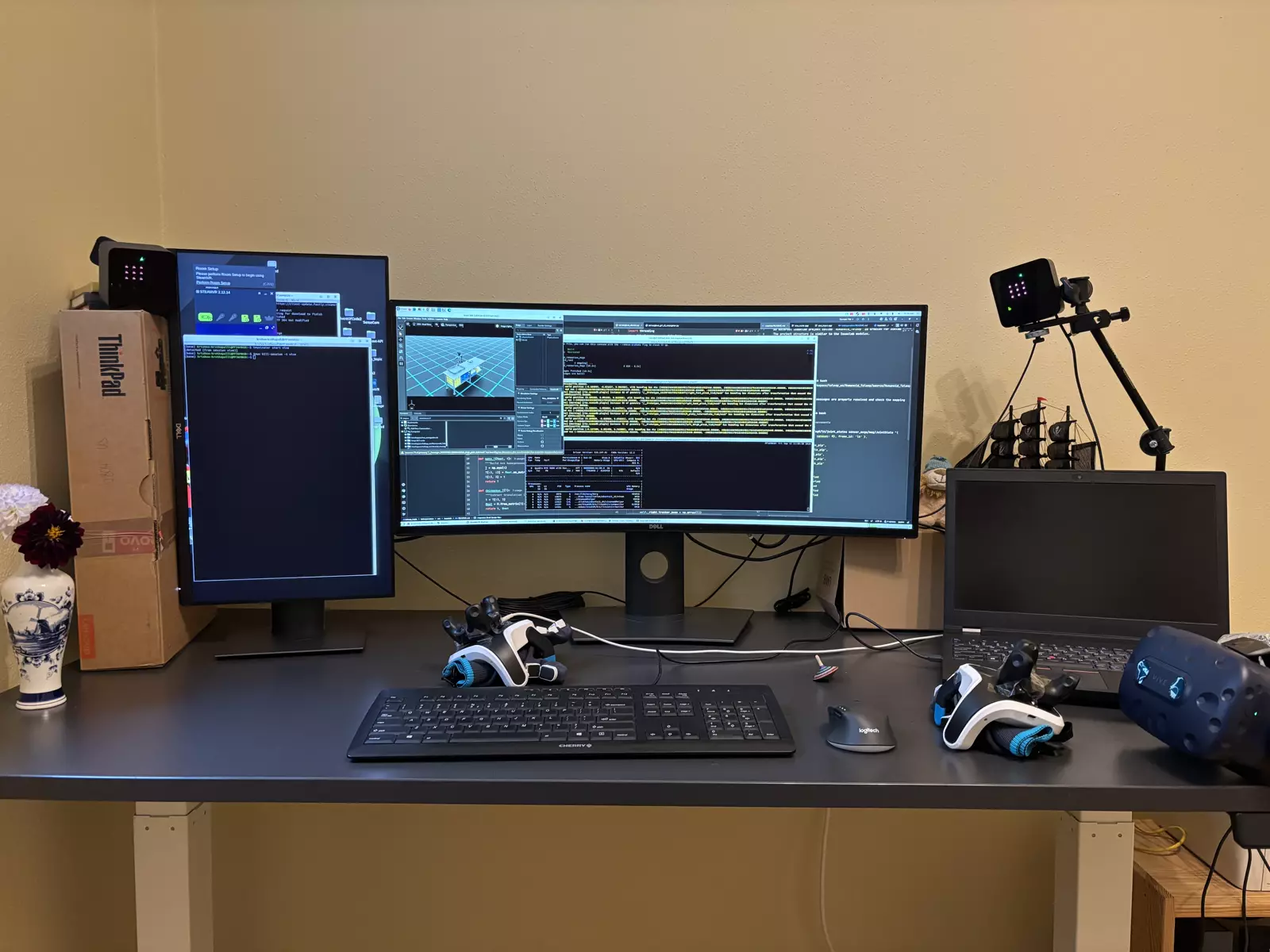
Then I extended it to trackers, used only for hand position. Trackers don’t label themselves left or right, so I added a startup calibration: hold them in a known pose, and the session assigns left and right consistently.
The setup
Gloves give finger bend and hand orientation; trackers give hand position, one per hand. Isaac Lab gets hand joint targets from the gloves and hand position targets from the trackers. Fingers and wrist come from the gloves; coarse position in space comes from the trackers.
A few details that mattered
- The glove SDK only spoke ROS 1, so a
ros1_bridgecontainer joins it to the ROS 2 world. vive_ros2originally put both trackers on one topic. I split it into one topic per tracker.- Calibration runs on the first frame after every reset, so the operator’s pose at that moment becomes the reference.
- Wrist orientation turned out better from the glove’s IMU than from the tracker.
- I dropped DexPilot retargeting for a direct interpolation over the 22 hand joints.
Issues and next steps
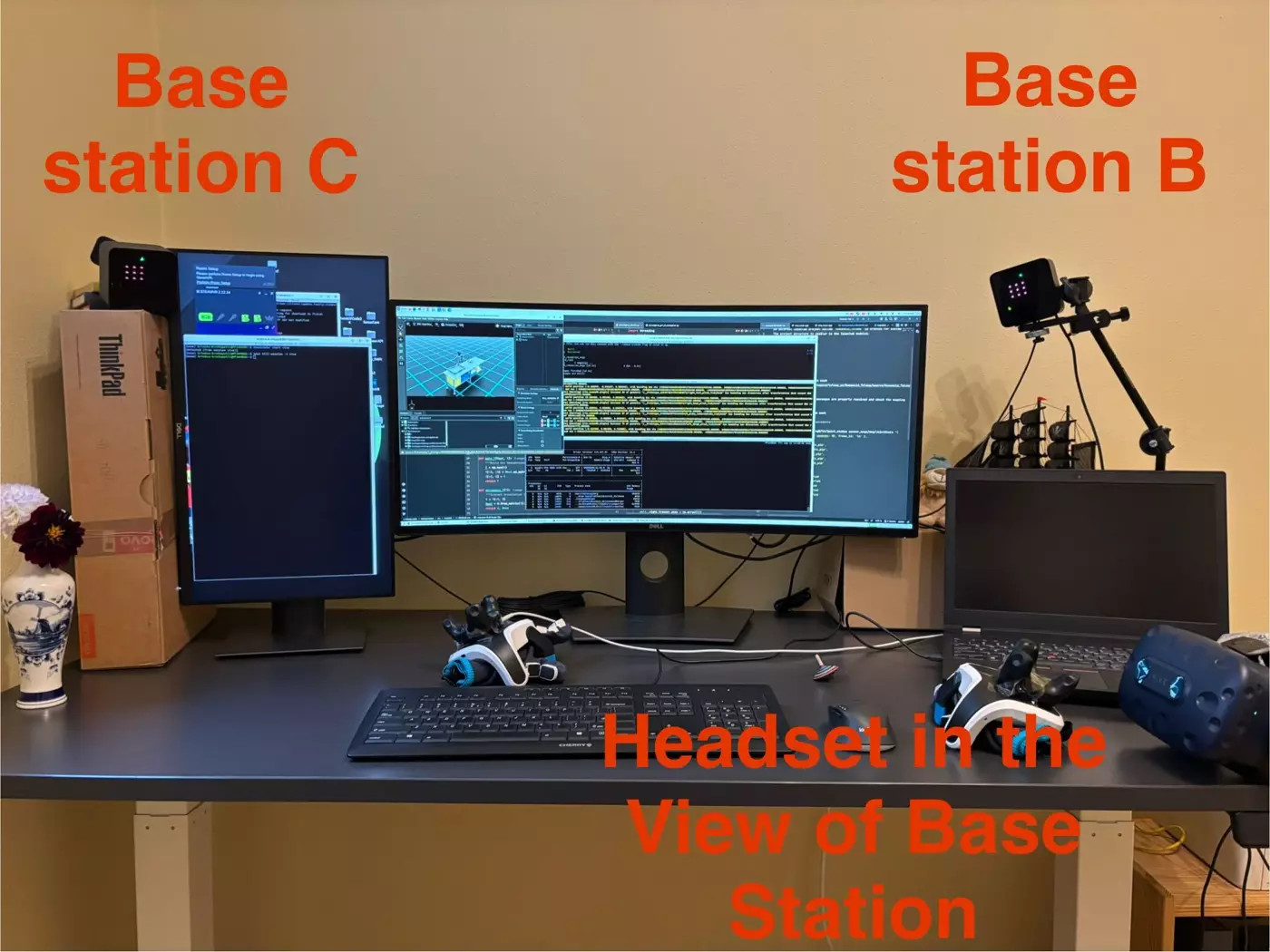
- Simulation slowdown. All three containers on one host slow Isaac Lab down. Plan: Isaac Lab on one machine, gloves and Vive on another, over the network.
- Nova2 gloves are bulky. You can’t fully close your fingers, which shows in long sessions. Plan: thinner, lighter Manus gloves.
Sensor-based teleop works for humanoid arms without headsets or occlusion-prone hand tracking.
Update, 2026: real robots
The next steps went from simulation to hardware:
- Unitree G1 from a PICO headset. I dockerised the open-source TWIST2 stack (PICO XR, XRoboToolkit, an ONNX whole-body policy) so it starts on the real G1 with one
docker compose up. The stack itself is upstream; my part was packaging it and adding Inspire dexterous hand support, with grip and open commands sent only on a state change to spare the Modbus link. - Manus gloves. Built an Isaac Lab 2.3 image with the Manus Core SDK plugin, the lighter gloves from the plan above.
- UR5e from PICO controllers (work in progress): Placo IK with a manipulability task, an IK thread at about 100 Hz and a separate servo thread.
Yes, the G1 path uses a headset. For whole-body teleop it was the fastest way to a working robot.